Robinhood Chain: Uniswap v4 vs v3 vs v2 pool guide
Robinhood Chain has active Uniswap v4, v3, and v2 pools. This guide explains where liquidity sits and what traders should check before swapping.

Tokens in this article
| Token | Price | 24h | 24h volume | Liquidity | |
|---|---|---|---|---|---|
| SPYSPDR S&P 500 ETF Trust • Robinhood Token | $754.50 | −0.1% | $75.66M | $5.5M | Swap |
 PONSPons PONSPons | $0.3826 | +0.8% | $31.67M | $14.01M | Swap |
| NVDANVIDIA • Robinhood Token | $233.44 | +0.2% | $28.16M | $4.68M | Swap |
 QIQuantum Inu QIQuantum Inu | $0.01686 | +513% | $20.07M | $411,773 | Swap |
 PONSPons PONSPons | $0.3701 | +8.0% | $12.85M | $3.5M | Swap |
| HBLINUHoodblade Shiba | $0.0000258 | +7,580% | $7.42M | $264,944 | Swap |
 SPYSPDR S&P 500 ETF Trust • Robinhood Token SPYSPDR S&P 500 ETF Trust • Robinhood Token | $780.72 | +0.5% | $5.87M | $1.73M | Swap |
 NVDANVIDIA • Robinhood Token NVDANVIDIA • Robinhood Token | $230.38 | −0.2% | $4.84M | $2.38M | Swap |
| STANDARDSTANDARD | $0.195 | −0.0% | $2.45M | $4.94M | Swap |
| QIQuantum Inu | $0.0000026 | −10.0% | $1.9M | $0 | Swap |
Robinhood Chain traders are seeing Uniswap v4, v3, and v2 pools side by side, and the version does matter when liquidity is split across several pools or fee tiers. In the tracked snapshot captured on October 10, 2026, Uniswap v4 handled $489.2 million of 24-hour volume across 114 pools, Uniswap v3 handled $188.1 million across 71 pools, and Uniswap v2 handled $2.1 million across 5 pools. The practical point is simple: the best swap on Robinhood Chain usually comes from the best specific pool, not from the newest version label.
The same token can trade in multiple pools with different quote assets, fee tiers, and liquidity profiles. That is why traders should check the exact pool before swapping, especially on a chain where new pools are appearing quickly.
Robinhood Chain has real liquidity in both v4 and v3
Market data here comes from GeckoTerminal’s active-pool coverage, not the entire chain. In that tracked set on October 10, 2026, Robinhood Chain showed 226 pools, 186 tokens, about $707.0 million in tracked 24-hour volume, and 1,076,999 tracked trades.
Within that snapshot, Uniswap v4 was the largest venue by tracked volume. Uniswap v3 was the clear second-largest. Uniswap v2 was much smaller, but not irrelevant.
A separate public GeckoTerminal overview used in research also showed both Uniswap v3 and Uniswap v4 operating at large scale on Robinhood Chain, which leads to the same conclusion: traders should expect real liquidity in both versions, and compare them directly rather than assuming one is always deeper. See the Uniswap v4 overview, Uniswap v3 overview, and Uniswap v2 overview.
What changes from Uniswap v2 to v3 to v4
Uniswap v2 is the simple baseline. The v2 whitepaper describes a constant-product design where liquidity sits across the full price curve, with arbitrary ERC-20/ERC-20 pairs and a standard 0.3% fee structure.
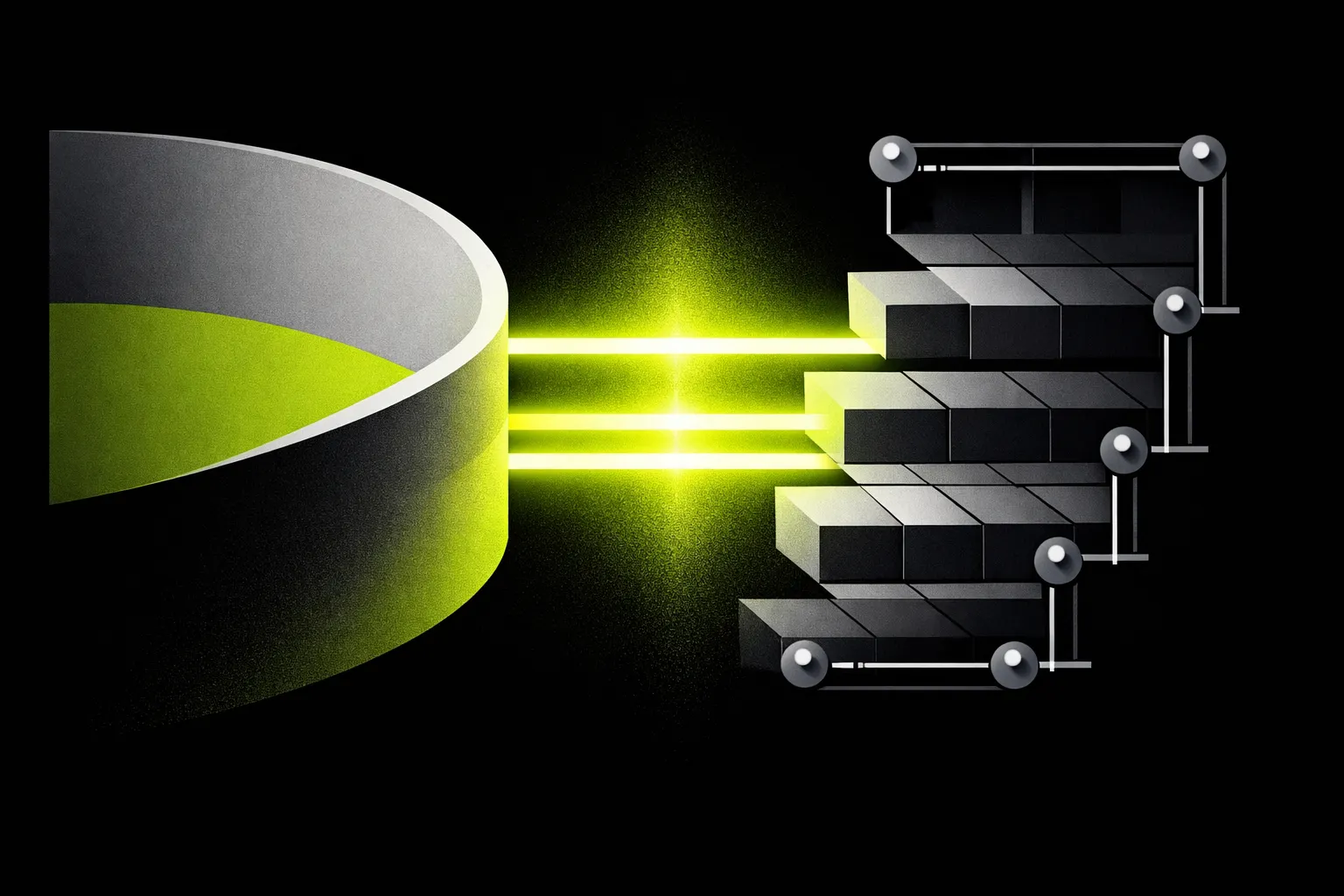
That full-range design is easy to understand, but it is not very capital efficient. Liquidity is spread everywhere, including price zones where the market may never trade.
Uniswap v3 changed that with concentrated liquidity. Uniswap’s developer docs explain that LPs choose price ranges and fee tiers, and only in-range liquidity earns fees.
For traders, that means a v3 pool can look much deeper near the current price than a v2 pool with similar total capital. It also means liquidity can fragment across 0.01%, 0.05%, 0.3%, and 1% tiers, and can thin out fast if price moves outside active ranges.
Uniswap v4 keeps concentrated liquidity, but the v4 whitepaper adds hooks, a singleton design, and custom or dynamic fee logic. In plain terms, one v4 pool may act a lot like a standard concentrated-liquidity market, while another may include extra logic around swaps or fees.
That is already visible on Robinhood Chain. Research found a Robinhood Chain WETH/WTH v4 pool page showing v4 pools with 0.1%, 0.9%, and 5% fees, plus a pool described as a live swap rebate hook. The important limit is that v4 is not one uniform trading experience.
When pool version changes your execution
Pool version matters most in three situations.
First, it matters when the same token has several active pools. In that case, liquidity can be split across versions, fee tiers, and quote assets, so the best route is not obvious from the token name alone.
Second, it matters when liquidity is concentrated. In v3 and v4, a pool can look efficient at the current price, then get worse quickly as a larger order pushes into thinner ranges. That is usually less of an issue for a small swap, and more of an issue for a larger one.
Third, it matters when fees differ sharply. A lower fee tier can improve a quote, but only if there is enough active liquidity behind it. A 0.01% pool with weak depth can still produce worse execution than a 0.3% pool with much stronger depth.
For many small trades in established pools, version may matter less than total active liquidity and fee. For larger trades, thin pools, or fast-moving tokens, version can materially change price impact.
Robinhood Chain examples show why pool selection matters
PONS is a clean example. It trades across multiple Robinhood Chain pools, not just one. In the tracked data, PONS had active v4 pools against USDG and WETH, plus v3 pools against WETH at different fee tiers.
| Pool | Version | Liquidity | 24h volume |
|---|---|---|---|
| PONS / USDG | v4 | $3.5M | $1.9M |
| PONS / USDG | v4 | $1.8M | $2.0M |
| PONS / WETH 1% | v3 | $3.3M | $537.6K |
| PONS / WETH 0.3% | v3 | $2.1M | $765.2K |
| NVDA / SUSD | v4 | $4.7M | $28.2M |
That does not say one version is always better. It says the same asset can have materially different conditions depending on pool design and quote asset.
Tokenized stock tokens show the same pattern. SPY on a v4 USDG pool had $5.5 million in liquidity and $75.7 million in 24-hour volume. NVDA on a v4 SUSD pool had $4.7 million in liquidity and $28.2 million in 24-hour volume. But an older NVDA v3 USDG pool still had $2.4 million in liquidity and $1.33 million in 24-hour volume, which is still meaningful.
Uniswap v2 still matters, but it may be much thinner. Research highlighted a Robinhood Chain STANDARD/USDG pool on Uniswap v2 with about $1,003 in liquidity, while the same token had deeper alternatives on v4 and v3 elsewhere on the chain. That is the risk with using version names as a shortcut.
New pools add another layer of risk. QI, trading on Uniswap v3, showed $20.1 million in 24-hour volume with about $411,773 in liquidity at 27 hours old. HBLINU, on Uniswap v4, showed $7.4 million in volume with about $264,944 in liquidity at 3 hours old. Those can be active markets, but they are still young pools.
When a pool is less than two days old, extreme percentage moves are listing effects, not organic rallies. Robinhood Chain had several four-digit and even five-digit 24-hour moves in pools only 2 to 21 hours old on October 10, 2026. That makes execution quality harder to judge from price action alone.
How to check a pool before swapping on Robinhood Chain
- Confirm the network first. Robinhood Chain is an Ethereum Layer 2 built on Arbitrum Orbit technology. Chain ID is 4663, gas is paid in ETH, the official docs are here, and the Blockscout explorer is here.
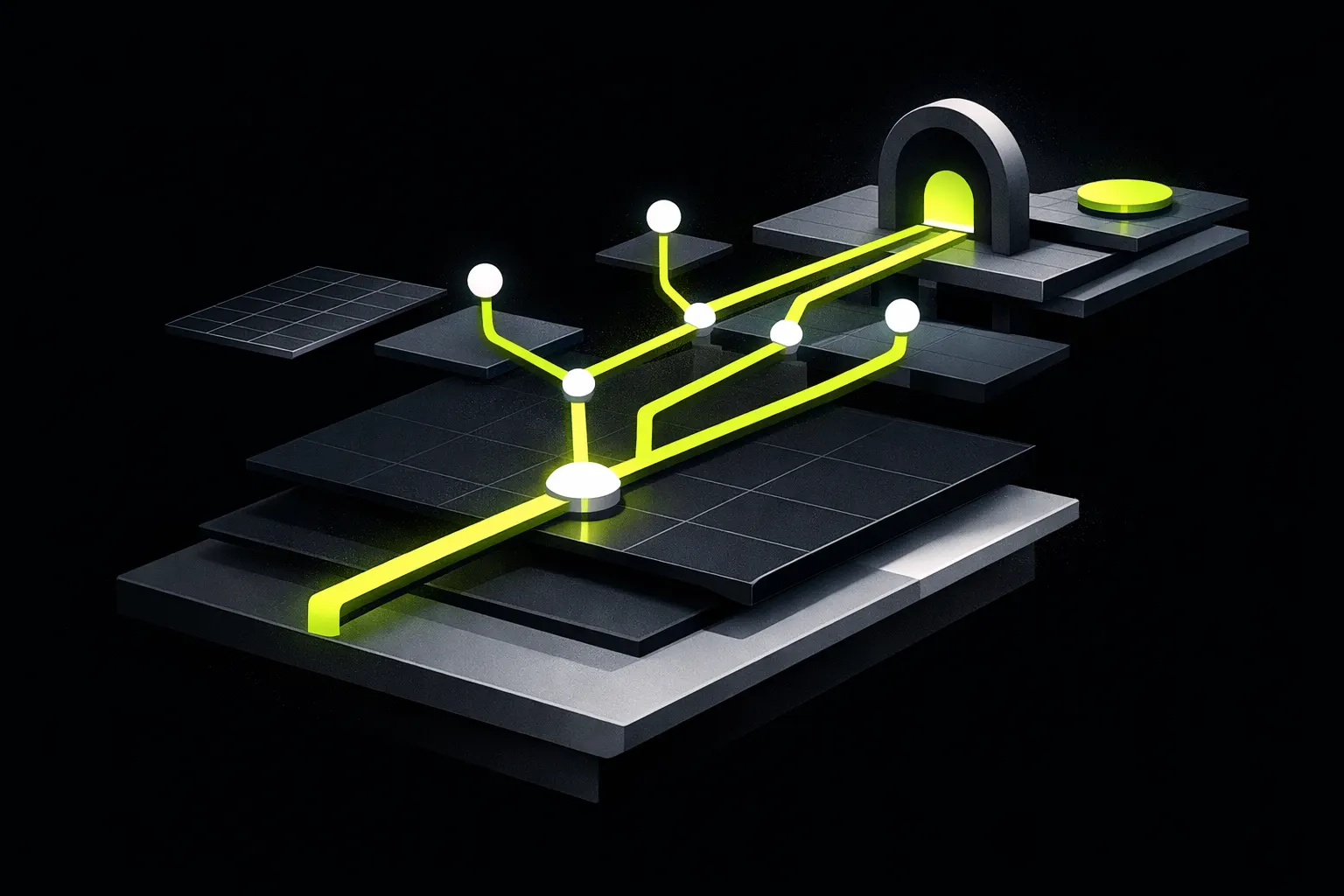
Verify the token address and list every active pool you can find. Use the explorer to confirm the token contract, then compare the pools for that token across v4, v3, and v2. Do not assume there is only one usable pool.
Check liquidity against your trade size. A pool with good headline volume can still be too shallow for a larger order. Price impact comes from the active liquidity available at the current market price, not from the token’s social attention.
Read the fee tier carefully. On v3 and v4, the fee tier can change execution meaningfully. Lower fees are helpful only if the pool is also deep enough. On v4, custom fee behavior or hook logic can make two pools for the same pair behave differently.
Look at pool age and trading mix. A brand-new pool can show impressive turnover and still be unstable. Buyers versus sellers, trade count, and age in hours give better context than a raw percentage move.
Check the quote asset before confirming the swap. Robinhood Chain commonly uses WETH, USDG, USDC, and USDe as quote assets. A token may look liquid against one quote asset and thin against another.
Review the route in your wallet before signing. On any non-custodial swap app, including RobinSwap, the wallet signs the final transaction. That is the last chance to catch a bad route, wrong token address, or an unexpectedly high price impact.
Common mistakes
- Picking by version name alone. A v4 pool is not automatically better than a v3 pool, and a v3 pool is not automatically better than a v2 pool.
- Ignoring the fee tier. Two pools for the same pair can have meaningfully different total costs.
- Confusing volume with depth. High 24-hour volume does not guarantee low slippage for the next trade.
- Skipping the quote asset check. WETH, USDG, and other quote assets can lead to very different pool conditions.
- Trading fresh pools as if they are mature markets. Low-liquidity and brand-new tokens carry high execution risk and higher downside risk.
- Forgetting ETH for gas or using the wrong chain. Robinhood Chain uses chain ID 4663 and gas is paid in ETH.
Frequently asked questions
Is Uniswap v4 always the best place to swap on Robinhood Chain?
No. In the tracked snapshot from October 10, 2026, Uniswap v4 had the most volume on Robinhood Chain, but the best execution still depends on the exact pool, fee tier, quote asset, and active liquidity at the current price.
Why can two pools for the same token give different prices?
Two pools for the same token can differ because liquidity may be split across Uniswap versions, fee tiers, quote assets, and concentrated price ranges. On Robinhood Chain, PONS and NVDA both show that one token can have several meaningfully different pools at the same time.
What does concentrated liquidity mean for a trader?
Concentrated liquidity means v3 and v4 liquidity is focused into chosen price ranges instead of being spread across the whole curve as in v2. That can improve depth near the current price, but it can also make execution worsen faster when a trade pushes beyond the active range.
Does high 24-hour volume mean a pool is safe to trade?
No. High 24-hour volume can appear in very young pools with modest liquidity. On Robinhood Chain, several new pools under two days old showed extreme percentage moves on October 10, 2026, which are better read as listing effects than as stable price discovery.
What should a wallet show for Robinhood Chain?
A wallet connected to Robinhood Chain should be on chain ID 4663 and hold ETH for gas. The official chain documentation is at docs.robinhood.com/chain, and the public Blockscout explorer is at robinhoodchain.blockscout.com.
Sources
- Uniswap v2 whitepaper docs.uniswap.org
- Uniswap Developers developers.uniswap.org
- Uniswap v4 whitepaper app.uniswap.org
- GeckoTerminal Robinhood Chain pool page geckoterminal.com
- GeckoTerminal Robinhood Chain overview geckoterminal.com
- GeckoTerminal Robinhood Chain overview geckoterminal.com
- GeckoTerminal Robinhood Chain overview geckoterminal.com
- Official docs docs.robinhood.com
- Block explorer (Blockscout) robinhoodchain.blockscout.com
Trade on Robinhood Chain
Swap any token on Robinhood Chain or bridge in from Ethereum, Base, Arbitrum and more. Non-custodial, live quotes.
Not financial advice. Token prices on Robinhood Chain move fast and new pools can lose most of their value within hours. Figures reflect the moment of capture on October 10, 2026. This article was produced automatically by the RobinSwap editorial pipeline from live on-chain data and the public sources listed above. RobinSwap is not affiliated with Robinhood Markets, Inc.