Tokenized Stocks on Robinhood Chain: How They Trade
Tokenized stocks on Robinhood Chain appear on-chain as “• Robinhood Token” assets. This guide explains where they trade and how to compare pools.
Tokens in this article
| Token | Price | 24h | 24h volume | Liquidity | |
|---|---|---|---|---|---|
 SPYSPDR S&P 500 ETF Trust • Robinhood Token | $755.62 | −1.6% | $12.52M | $2.72M | Swap |
 METAMeta Platforms • Robinhood Token | $614.10 | −2.0% | $10.18M | $1.08M | Swap |
 NVDANVIDIA • Robinhood Token | $203.68 | −1.2% | $8.2M | $2.65M | Swap |
 GOOGLAlphabet Class A • Robinhood Token | $281.35 | −0.5% | $2.6M | $845,344 | Swap |
 QQQInvesco QQQ • Robinhood Token | $694.09 | −0.3% | $1.75M | $1.34M | Swap |
 AAPLApple • Robinhood Token | $345.74 | −0.5% | $1.3M | $381,366 | Swap |
 TSLATesla • Robinhood Token | $399.05 | −0.9% | $1.17M | $484,514 | Swap |
 GMEGameStop • Robinhood Token | $24.40 | +4.6% | $1.17M | $356,626 | Swap |
 MUMicron Technology • Robinhood Token | $900.10 | +1.2% | $593,897 | $1.45M | Swap |
Tokenized stocks on Robinhood Chain are Robinhood-issued stock tokens that appear on-chain as names ending in “• Robinhood Token.” They trade in normal DEX pools against assets like USDG and WETH, and sometimes against other stock tokens, so the practical job is simple: verify the exact token, compare pool depth and volume, and avoid unnecessary slippage.
What tokenized stocks on Robinhood Chain are
Robinhood Chain is an Ethereum-compatible Layer 2. Robinhood’s October 28, 2026 10-Q describes it as a permissionless network built for financial services and tokenized real-world assets.
For trading purposes, the easiest identifier is the token name. If the asset name ends with “• Robinhood Token”, it is one of Robinhood’s tokenized stock tokens. Examples in the tracked data include SPDR S&P 500 ETF Trust • Robinhood Token with symbol SPY, NVIDIA • Robinhood Token with symbol NVDA, and GameStop • Robinhood Token with symbol GME.
Robinhood’s October 27, 2026 Q3 results release said 100 stock tokens had been added to Robinhood Chain.
One important detail: ticker symbols alone are not enough. On-chain markets reuse symbols often. The October 31, 2026 snapshot includes duplicate symbols for unrelated tokens, including more than one WOFL and more than one DODO. That is a good reminder to verify the full token name and contract address, not just the ticker.
Where SPY, NVDA, and GME trade on Robinhood Chain
The tracked Robinhood Chain snapshot captured on October 31, 2026 covered 227 pools, 164 tokens, about $419.8 million in 24-hour volume, and 816,699 tracked trades. The largest tracked DEX buckets were Uniswap V4 (Robinhood) at $163.7 million, Metric (Robinhood) at $98.1 million, Uniswap V3 (Robinhood) at $94.9 million, and Aero Slipstream (Robinhood) at $43.8 million.
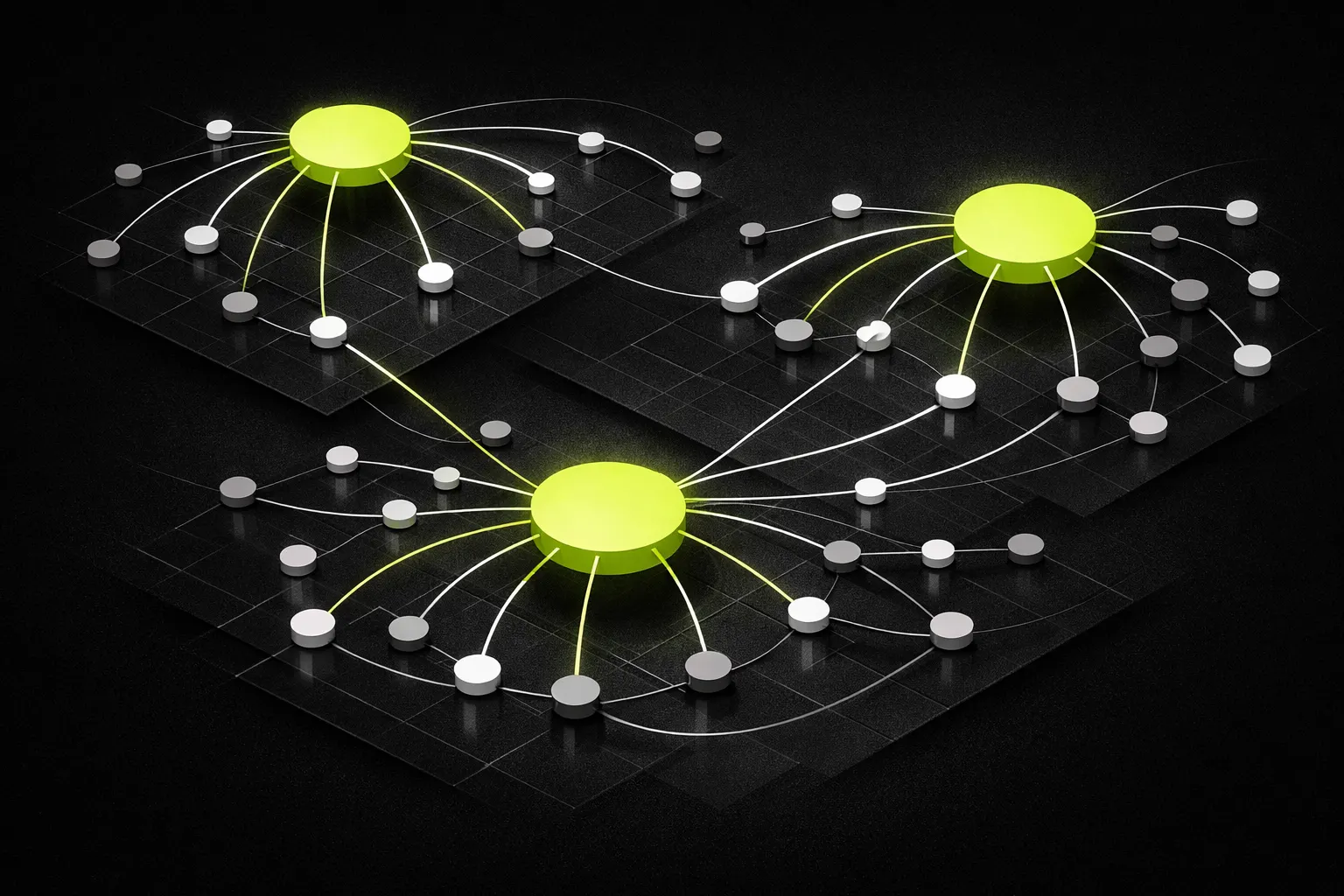
That matters because tokenized stocks are spread across more than one venue.
| Token | Tracked 24h volume | Main venues in tracked pools | Common quotes in tracked pools |
|---|---|---|---|
| SPY | $12.5M | Uniswap V4, Uniswap V3, Aero Slipstream, Ramses V3, Alandale | USDG, WETH, NVDA, AAPL, MU |
| NVDA | $8.2M | Uniswap V3, Metric, Aero Slipstream | USDG, WETH |
| GME | $1.17M | Uniswap V3 | USDG, WETH |
SPY is the broadest example
SPY is the most active tokenized stock in the tracked snapshot, with $12.5 million in 24-hour volume and 35,062 trades. Its pools span several DEXs and several quote assets.
A few tracked SPY pools show how different pool profiles can be:
- SPY / USDG 0.3% on Uniswap V4 had about $2.7 million in liquidity.
- SPY / WETH 0.05% on Uniswap V3 traded about $2.08 million in 24-hour volume.
- SPY / USDG 0.01% on Uniswap V4 traded about $2.69 million in 24-hour volume.
- SPY / NVDA 0.025% on Uniswap V4 traded about $1.56 million in 24-hour volume.
So SPY is not just a stablecoin pair. It also trades against WETH and against other tokenized stocks.
NVDA shows the difference between depth and activity
NVDA traded about $8.2 million in 24-hour volume with 13,181 trades.
Its deepest tracked pool was NVDA / USDG 0.05% on Uniswap V3, with about $2.65 million in liquidity and $1.52 million in 24-hour volume. But its busiest tracked pool was NVDA / USDG on Metric, which had about $4.62 million in 24-hour volume on roughly $747,839 in liquidity.
That is a useful trading lesson. The deepest pool is not always the one doing the most volume, and the busiest pool is not always the one best suited for larger size.
GME is active but less distributed
GME traded about $1.17 million in 24-hour volume with 8,755 trades. In the tracked data, its activity was concentrated on Uniswap V3 rather than spread across many venues.
Its main tracked pools were:
- GME / USDG 1% with about $356,626 in liquidity and $399,821 in 24-hour volume.
- GME / USDG 0.05% with about $82,280 in liquidity and $516,525 in 24-hour volume.
- GME / WETH 0.05% with about $27,162 in liquidity and $250,009 in 24-hour volume.
That smaller WETH pool is a good example of where slippage can become a real issue faster.
How to add Robinhood Chain to a wallet
Official docs and the Blockscout explorer provide the network details.
- Open the network settings in an EVM wallet.
- Add a custom network named Robinhood Chain.
- Use chain ID 4663.
- Use the public RPC:
https://rpc.mainnet.chain.robinhood.com. - Use the explorer URL:
https://robinhoodchain.blockscout.com. - Save the network and switch to it.
- Make sure the wallet has ETH for gas.
After that, the wallet can display Robinhood Chain balances and transactions. If a token does not appear automatically, the contract address can be checked on the explorer before importing it into the wallet.
How to compare liquidity, volume, and slippage
Start with the exact token contract, then compare the pools.

1. Check the token identity first
Look for the full token name ending in “• Robinhood Token.” That is safer than relying on a ticker. This matters on a chain where symbols are reused.
2. Check the quote asset
The common quote assets on Robinhood Chain are WETH and USDG, and both are common for tokenized stocks.
- A USDG pair is simpler if the goal is a dollar-like quote asset.
- A WETH pair may make more sense if the starting asset is ETH-related exposure.
- A stock-to-stock pair can reduce hops, but it adds relative-price risk between two tokenized stocks.
Tracked data shows several stock-to-stock examples, including SPY/NVDA, SPY/AAPL, META/SPY, GOOGL/SPY, QQQ/SPY, and TSLA/SPY.
3. Check liquidity before chasing volume
Liquidity is the first defense against bad fills.
For SPY, the gap between pools is large. One tracked SPY pool had about $2.7 million in liquidity, while another SPY/WETH pool on Ramses V3 had about $56,693. Both can be active, but they will not behave the same for a larger order.
For GME, the difference is even starker. A GME/USDG pool had about $356,626 in liquidity, while GME/WETH had about $27,162.
4. Use volume as a second check
Volume helps show where trading is actually happening.
For NVDA, Metric’s NVDA/USDG pool handled about $4.62 million in 24-hour volume, even though it was not the deepest tracked pool. That may indicate strong recent flow, but it does not eliminate slippage risk for size.
5. Read order flow as context, not a signal
Buyer and seller counts are useful as a rough temperature check. On October 31, 2026:
- SPY had 4,378 buyers and 5,099 sellers.
- NVDA had 2,125 buyers and 2,146 sellers.
- GME had 1,666 buyers and 1,848 sellers.
That is context. It is not a trading rule.
How to swap a tokenized stock on Robinhood Chain
- Find the exact token. Search by contract address or full name, not ticker alone.
- Pick the quote asset on purpose. Compare a USDG pool against a WETH pool if both are available.
- Test a small size first. Check the quoted output and price impact.
- Compare at least two pools or routes. A lower fee tier does not guarantee the best execution if the pool is shallow.
- Review gas and final output. Gas on Robinhood Chain is paid in ETH.
- Confirm the swap, then verify it on Blockscout.
- Re-check the pool next time. Venue leadership changes. On October 31, 2026, SPY’s deepest tracked pool and busiest tracked pool were not the same pool.
For traders who want one interface for swaps and bridging, RobinSwap is one non-custodial option on the chain, but the execution checks above matter no matter which app is used.
Common mistakes
- Trading the ticker instead of the contract. This is the fastest way to hit the wrong asset.
- Assuming the deepest pool is always the cheapest trade. Sometimes the busiest pool is elsewhere.
- Ignoring the quote asset. A WETH route and a USDG route can produce different results even for the same stock token.
- Using too much size in a shallow pool. The smaller GME and SPY side pools are the obvious examples.
- Confusing established stock tokens with brand-new token launches. The same October 31, 2026 snapshot includes several sub-24-hour pools showing four-digit percentage moves. Those are listing effects, not organic rallies. Brand-new and low-liquidity tokens carry much higher risk than the established tokenized stock pools covered here.
Frequently asked questions
What are tokenized stocks on Robinhood Chain?
Tokenized stocks on Robinhood Chain are Robinhood-issued stock tokens that trade in on-chain DEX pools. On-chain, they are identified by names ending in “• Robinhood Token,” such as NVIDIA • Robinhood Token or GameStop • Robinhood Token.
How can I tell if a Robinhood Chain token is a stock token?
The safest quick check is the full on-chain name. If the token name ends with “• Robinhood Token,” it is one of Robinhood’s tokenized stock tokens, but the contract address should still be verified because tickers alone are not reliable.
Do tokenized stocks on Robinhood Chain only trade against stablecoins?
No. On October 31, 2026, tracked pools showed tokenized stocks trading against USDG and WETH, and some also traded directly against other stock tokens, including pairs like SPY/NVDA, META/SPY, and QQQ/SPY.
Which tokenized stock had the most tracked volume in this snapshot?
In the October 31, 2026 tracked snapshot, SPY had the most tokenized-stock volume at about $12.5 million over 24 hours, ahead of META at about $10.2 million and NVDA at about $8.2 million.
What is the safest way to trade tokenized stocks on Robinhood Chain?
The safest basic process is to verify the exact contract, compare more than one pool, favor deeper liquidity for larger orders, and test a small amount before sending full size. That does not remove risk, but it helps reduce wrong-token errors and avoidable slippage.
Sources
- Robinhood Chain docs docs.robinhood.com
- Robinhood Chain Blockscout explorer robinhoodchain.blockscout.com
- Robinhood Reports Third Quarter 2026 Results investors.robinhood.com
- Robinhood Q3 2026 10-Q investors.robinhood.com
Trade on Robinhood Chain
Swap any token on Robinhood Chain or bridge in from Ethereum, Base, Arbitrum and more. Non-custodial, live quotes.
Not financial advice. Token prices on Robinhood Chain move fast and new pools can lose most of their value within hours. Figures reflect the moment of capture on October 31, 2026. This article was produced automatically by the RobinSwap editorial pipeline from live on-chain data and the public sources listed above. RobinSwap is not affiliated with Robinhood Markets, Inc.