Robinhood Chain Token Swaps: A Step-by-Step Guide
Robinhood Chain swaps are straightforward once the wallet, gas, and pool checks are clear. This guide covers setup, quote review, and confirmation.
Tokens in this article
| Token | Price | 24h | 24h volume | Liquidity | |
|---|---|---|---|---|---|
 AnthropicAnthropic | $0.000102 | +922% | $15.2M | $10.35M | Swap |
 AnthropicAnthropic | $0.000102 | +919% | $13.05M | — | Swap |
 SPYSPDR S&P 500 ETF Trust • Robinhood Token | $773.12 | +0.3% | $12.42M | $1.89M | Swap |
 NVDANVIDIA • Robinhood Token | $217.83 | −0.4% | $7.17M | $3.08M | Swap |
| RobotaxiRobotaxi Coin | $0.0000827 | +1,073% | $1.3M | $14 | Swap |
| ROBOTAXIRobotaxi Coin | $0.00000237 | −95.9% | $925,503 | $2,337 | Swap |
| RobotaxiRobotaxi Coin | $0.000189 | +15,700% | $776,389 | $28,205 | Swap |
| ROBOTAXIRobotaxi Coin | $0.0000118 | −0.0% | $527,716 | — | Swap |
| PULSEPulse | $0.000236 | +649% | $382,746 | $63,589 | Swap |
| PULSEPulse | $0.000864 | +11,403% | $234,903 | $84,570 | Swap |
Robinhood Chain token swaps are not complicated once the basics are in place. Add the network, keep some ETH for gas, choose the correct token pair, review the quote, and sign the transaction in your wallet.
Most problems come from simple misses: the wrong network, no ETH for gas, or a thin pool that moves too much when the trade size hits it. Robinhood Chain is active enough that there are many pools to choose from, so the main job is not finding a market. It is picking the right one.
What you need before a Robinhood Chain swap
Start with the network details and a wallet that can connect to a non-custodial swap app. On Robinhood Chain, every transaction is signed in your own wallet.
The basic network facts are:
- Chain id:
4663 - Gas asset:
ETH - Public RPC: https://rpc.mainnet.chain.robinhood.com
- Explorer: https://robinhoodchain.blockscout.com
- Official docs: https://docs.robinhood.com/chain
As of October 28, 2026, GeckoTerminal tracked 227 Robinhood Chain pools across 164 tokens, with $531.3 million in 24-hour tracked volume and 958,355 tracked trades. That tracked volume covers the most active pools, not the entire chain.
Activity is spread across several DEXes. The largest tracked share was Uniswap V4 on Robinhood Chain with $287.6 million across 138 pools, followed by Uniswap V3 with $149.6 million across 36 pools. That matters because the same token can trade in more than one pool, with different liquidity and different execution quality.
Step 1: Add Robinhood Chain to your wallet
- Open your wallet’s network settings.
- Add a custom network if Robinhood Chain is not already listed.
- Enter chain id
4663and the public RPC endpoint: https://rpc.mainnet.chain.robinhood.com. - Add the block explorer URL: https://robinhoodchain.blockscout.com.
- Save the network and switch your wallet to Robinhood Chain.
If a swap app offers to add the network automatically, still check that the wallet ended up on chain id 4663. Wrong-network mistakes are common and easy to miss when several EVM chains are open in the same wallet.
Step 2: Fund the wallet and keep ETH for gas
- Make sure the wallet holds the token you want to swap from.
- Keep some ETH in the same wallet for gas.
- If you plan to trade against a stable or wrapped asset, expect common quote assets such as WETH, USDG, USDC, and USDe.
Gas on Robinhood Chain is paid in ETH. A wallet full of the token you want to sell is not enough if the ETH balance is zero.
If your funds are on another network, a bridge-enabled app such as RobinSwap can move assets in from Ethereum, Base, Arbitrum, OP Mainnet, Polygon, BNB Chain, Avalanche, Linea, Scroll, and Blast. After bridging, confirm the balances on Robinhood Chain before starting the swap.
Step 3: Choose the token pair and inspect the pool
- Select the token you want to sell and the token you want to receive.
- Verify the token contract address before trading, especially for newer or fast-moving names.
- Check the pool’s liquidity, recent volume, and age if the app or the explorer shows them.
- Prefer pools with enough depth for your trade size.
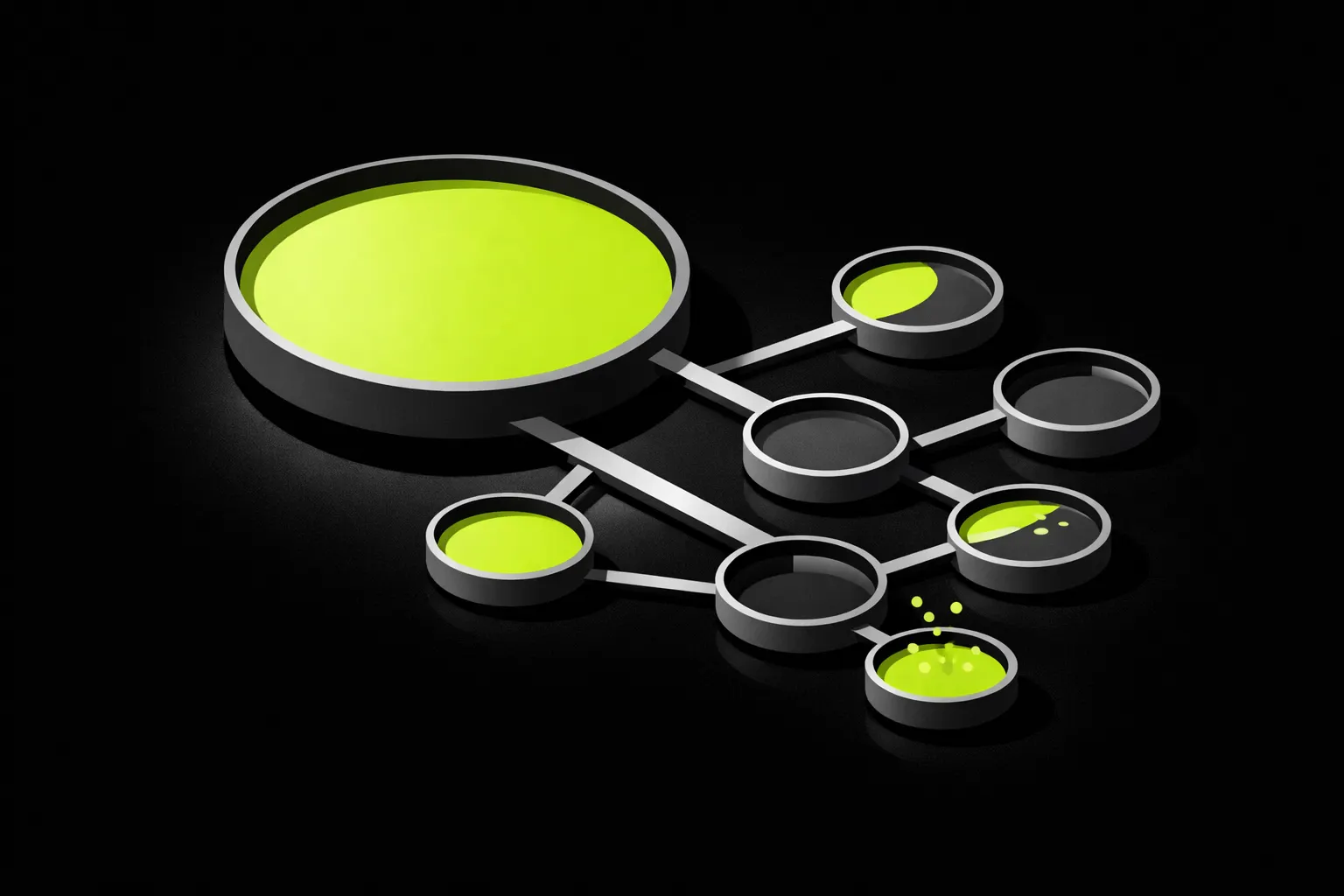
This step matters more than beginners expect. A token can look active on a price screen and still be hard to trade cleanly if liquidity is shallow.
A few examples from October 28, 2026 show the difference. The tracked Anthropic pool was only 6 hours old, but it had about $10.3 million in liquidity and $15.2 million in 24-hour volume. Robotaxi, by contrast, had about $28,205 in liquidity and $776,389 in 24-hour volume in a 12-hour-old pool.
Those are not the same trading conditions. A modest order can move a $28,205 pool much more than a multi-million-dollar pool.
Pool age matters too. Brand-new markets can print extreme percentage moves that say more about listing effects than durable price discovery. Robotaxi was up 15,699.7% in 24 hours with a pool age of 12 hours, and PULSE was up 11,402.52% with a pool age of 0 hours. On pools younger than two days, those kinds of jumps are listing effects, not organic rallies.
For tokenized stock tokens, deeper markets are easier to find. SPY had $12.4 million in 24-hour volume, and its tracked SPY/WETH Uniswap V3 pool had about $1.9 million in liquidity. NVDA had $7.2 million in 24-hour volume, and its tracked NVDA/USDG Uniswap V3 pool had about $3.1 million in liquidity. That does not guarantee a better fill, but it usually means lower price impact than a brand-new microcap pool.
Step 4: Review price impact, slippage, and fees
- Enter the amount you want to swap.
- Read the estimated amount out.
- Check price impact before signing.
- Check the slippage setting if the app exposes it.
- Check the gas estimate in ETH.

Price impact is the immediate change your own trade causes in the pool. If that number looks high, the trade is large relative to the available liquidity.
Slippage is different. It is the gap between the quoted result and the final executed result if the market moves while the transaction is pending.
For beginners, the main rule is simple: if the quote looks much worse than expected, do not rush past it. Smaller trades, deeper pools, or a different quote asset can sometimes reduce the damage.
Also pay attention to the quote asset. On Robinhood Chain, the same token may trade against WETH, USDG, or another asset. That can change both price impact and the amount of extra exposure you take during the trade.
Step 5: Confirm the swap and verify it on-chain
- Confirm the swap in your wallet.
- Wait for the wallet or app to report the transaction as submitted.
- Open the transaction on the explorer if you want a cleaner status view.
- Confirm that the token balances changed as expected after finalization.
Because Robinhood Chain is non-custodial, the final step happens in your wallet. If the wallet asks for a signature, read the token symbols and amounts one more time before approving.
The explorer is useful when the wallet view lags. On Robinhood Chain Blockscout, you can check whether the transaction succeeded, how much gas was paid, and which token transfers occurred.
If the swap fails, the usual causes are still the simple ones: no ETH for gas, a pool moving too quickly for the quoted terms, or choosing the wrong token contract.
Common mistakes
- Forgetting ETH for gas. Robinhood Chain uses ETH for gas even if the trade itself is between other tokens.
- Trading the wrong token with a similar name. New token launches can create lookalike symbols and names.
- Ignoring liquidity depth. High volume alone does not mean easy execution if liquidity is thin.
- Treating first-day price spikes as normal market behavior. On very young pools, extreme moves are usually listing effects.
- Skipping the explorer check after a problem. The explorer is the best source for whether the transaction actually landed.
A cautious routine helps. Check the network, check the gas balance, check the contract, check the price impact, then sign.
Frequently asked questions
Do I need ETH to swap tokens on Robinhood Chain?
Yes. Gas on Robinhood Chain is paid in ETH, so a wallet needs some ETH even if the swap is between other tokens.
How do I add Robinhood Chain to a wallet?
Add Robinhood Chain as a custom EVM network with chain id 4663, the public RPC https://rpc.mainnet.chain.robinhood.com, and the explorer https://robinhoodchain.blockscout.com.
How can I tell if a Robinhood Chain pool is too thin for my trade?
Check liquidity and price impact together. A pool with low liquidity, such as Robotaxi at about $28,205 on October 28, 2026, can move much more on a modest order than a deeper pool.
Can I swap tokenized stock tokens on Robinhood Chain?
Yes. Tokens whose names end with “• Robinhood Token” are Robinhood’s tokenized stock tokens issued by Robinhood, and they trade in DEX pools on Robinhood Chain. Examples in active markets include SPY and NVDA.
Where should I verify whether a Robinhood Chain swap succeeded?
Use the Robinhood Chain Blockscout explorer. It shows transaction status, gas paid, and token transfers, which is often clearer than a wallet refresh screen.
Sources
- Robinhood Chain docs docs.robinhood.com
- Robinhood Chain public RPC rpc.mainnet.chain.robinhood.com
- Robinhood Chain Blockscout robinhoodchain.blockscout.com
Trade on Robinhood Chain
Swap any token on Robinhood Chain or bridge in from Ethereum, Base, Arbitrum and more. Non-custodial, live quotes.
Not financial advice. Token prices on Robinhood Chain move fast and new pools can lose most of their value within hours. Figures reflect the moment of capture on October 28, 2026. This article was produced automatically by the RobinSwap editorial pipeline from live on-chain data and the public sources listed above. RobinSwap is not affiliated with Robinhood Markets, Inc.